Right to Housing: Projects, Policies, and Knowledge Exchange after the Second World War
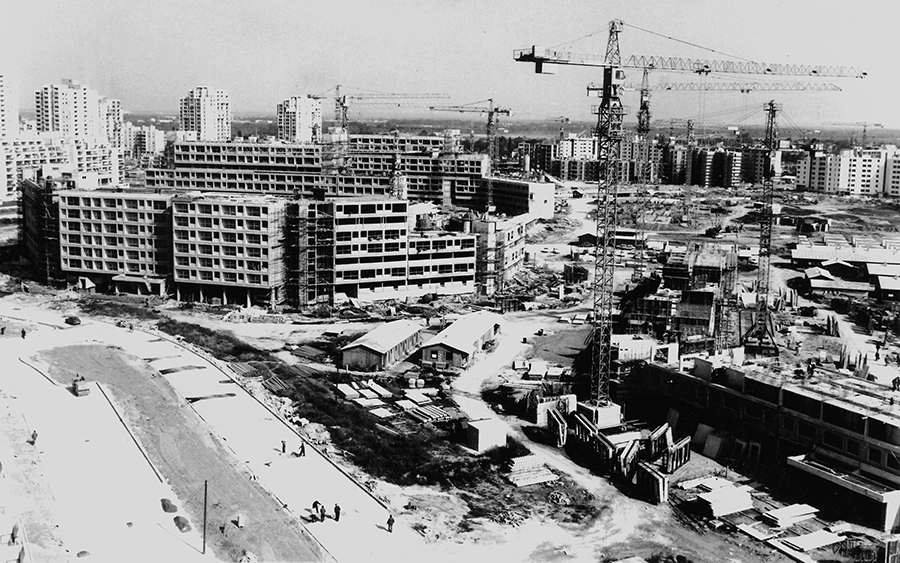
In recent years, housing has re-emerged as one of the most pressing social and political issues, driven by rising real estate prices, declining affordability, shrinking dwelling sizes, and the deterioration of residential environments. As new models of affordable and public housing are once again being debated, the conference Right to Housing: Projects, Policies, and Knowledge Exchange after the Second World War revisits housing experiences from 1945 to 1991, when providing decent housing and improving everyday life were key goals across both Eastern and Western contexts. By approaching housing as a key site where political projects, expert knowledge, and everyday life intersect, the conference contributes both to historical scholarship and to current discussions on affordable housing.
Right to Housing is the first of two conferences organized within the ERC project Housing.Yu – Right to Housing: The Production of Spaces of Everyday Life in Yugoslavia (1945–1991). The project examines the distinctive experiments of self-managed socialist Yugoslavia in housing policy, finance, tenure, urban planning, and residential construction.
With the aim of positioning Yugoslavia within the broader context of post-war mass housing, the conference explores the development of housing policies, architecture, and housing estates, citizens’ participation, and the circulation of knowledge and expertise, in order to understand how housing in its various forms was conceived, planned, designed, constructed, accessed, allocated, inhabited, managed, and experienced by different social groups.
Particular attention is given to the role of housing stakeholders—the state, producers (architects, planners, construction companies, and professional associations), as well as citizens as residents and users—and to their interactions as they shape the availability and accessibility of housing, housing rights, everyday practices of dwelling, and forms of residential self-management within buildings and through housing cooperatives. The conference also examines how housing stakeholders drew on pre-war legacies and foreign models through transnational exchanges of knowledge, with a primary focus on European contexts.
Proposals addressing other global contexts are also welcome, particularly where they contribute to a broader understanding of post-war housing and knowledge transfer.
A distinct research strand of both the project and the conference is Knowledge in Danger, which addresses the preservation, processing, systematization, digitisation, storage, and public presentation of architectural and urban planning documentation related to mass housing in the postwar period. Contributions from scholars, archivists, curators, and heritage professionals working on endangered housing-related collections are particularly encouraged.
Important information and dates
The conference will take place in Zagreb and is organized by the Institute of Art History in Zagreb and Juraj Dobrila University of Pula, from 22 to 24 October 2026.
The conference program, to be published in July, will include two keynote lectures. The working language of the conference is English. The conference welcomes individual paper proposals only. Each presentation will be allotted 15 minutes. There is no conference fee. Unfortunately, the organizers are not able to cover travel and accommodation costs.
Submission guidelines
Please submit an abstract of 200 to 300 words, accompanied by a short biographical note of up to 150 words, via the conference submission form by 1 June 2026.
Applicants will be notified of acceptance by 15 June 2026, and the conference preliminary programme will be announced by 1 July 2026.
For inquiries, please contact us via e-mail at housing.yu.conf@ipu.hr.
Programme Committee
Tamara Bjažić Klarin, Institute of Art History, Zagreb
Lidija Butković Mićin, University of Zadar
Maria Drémaité, Vilnius University
Igor Duda, Juraj Dobrila University of Pula
Miles Glendinning, The University of Edinburgh
Ljiljana Kolešnik, Institute of Art History, Zagreb
Martina Malešič, Museum of Architecture and Design, Ljubljana
Dubravka Stojanović, University of Belgrade
Mejrema Zatrić, International University of Sarajevo
Irena Šimić, Institute of Art History, Zagreb
Organizing Committee
Saša Vejzagić
Emil Jurcan
Aida Murtić
Hana Bečeić
Antun Dulibić
Frano Petar Zovko
Marija Jurić
All members of the Organizing Committee are affiliated with the Institute of Art History, Zagreb.
-
Housing.Yu – “Right to Housing: the Production of Spaces of Everyday Life in Yugoslavia (1945-1991)” is funded by the European Research Council, ERC Consolidator Grant no. 101171985, and is hosted by the Institute of Art History in Zagreb from 2025 to 2030.

#HousingYu #ERCCoG