Cultural History of Collective Housing and Commercial Urbanism
As part of the Housing.Yu project, Lea Horvat and Ivana Mihaela Žimbrek will deliver public lectures on the cultural history of collective housing and commercial urbanism on Friday, 29 May 2026, at 1:00 p.m. at the Faculty of Architecture in Zagreb (Kačićeva 26, 2nd floor, room 221).
Lea Horvat
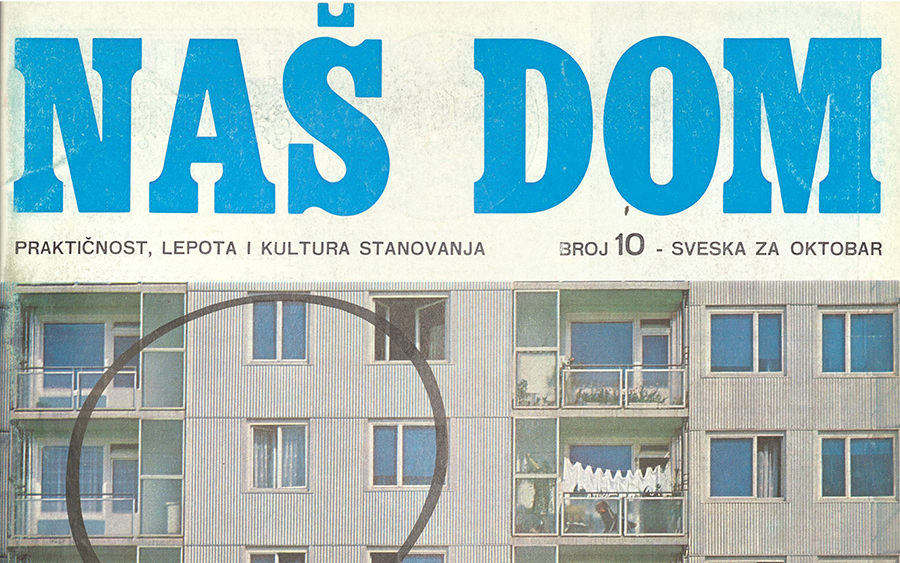
How Can Cultural History Help Us Understand Collective Housing?
Architectural history, human geography, sociology and literature are just some of the approaches through which the complex phenomenon of collective housing can be explored. This lecture focuses on the perspective of cultural history and the questions, sources and themes it brings into view. It will highlight the importance of both popular and professional perceptions of collective housing, which are inseparable from the historical contexts in which they emerge and which significantly shape the material condition of the housing stock, local residents’ perceptions and, ultimately, the future of collective housing. The Yugoslav context will be situated within broader global trends, pointing to both parallels and occasional divergences.
Lea Horvat is employed at the Department of Cultural History and Anthropology at the Friedrich Schiller University Jena. She obtained her PhD in History from the University of Hamburg and her MA in Art History and Comparative Literature from the Faculty of Humanities and Social Sciences, University of Zagreb. She is the author of the monograph Harte Währung Beton (2024), which examines the cultural history of collective housing in Yugoslavia.
Ivana Mihaela Žimbrek
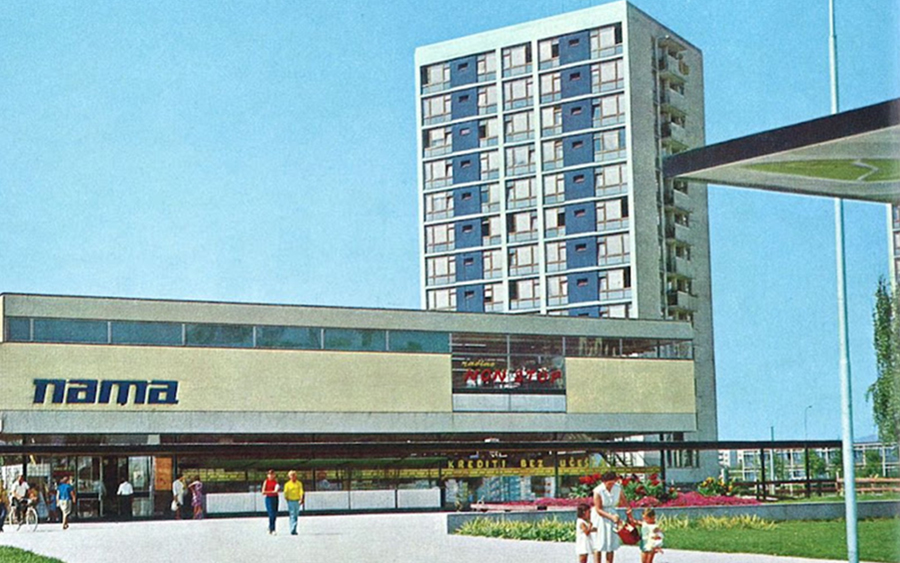
“The Heart of a Neighbourhood”: Commercial Urbanism and the Construction of Department Stores in Yugoslavia, 1950–1970
This lecture analyses the processes through which knowledge about the construction of department stores was produced, exchanged and implemented in socialist Yugoslavia between the 1950s and the 1970s. The first part maps the early discussions and reflections of Yugoslav architects (including Lidija Podbregar-Vasle) on the department-store typology and its role in urban planning and city-building, as well as in the development of the system of socialist self-management. The second part examines the construction processes and social role of department stores in Zagreb and Belgrade during the 1960s, focusing on the companies Narodni magazin (Nama) and Robne kuće Beograd.
Ivana Mihaela Žimbrek is affiliated with the Institute for Historical and Social Research at the Chamber of Labour in Vienna, where she is currently working on a monograph on the history of Yugoslav department stores. She holds a PhD and an MA in History from the Central European University in Vienna, as well as an MA in Art History and Comparative Literature from the Faculty of Humanities and Social Sciences, University of Zagreb.
The programme will be moderated by Igor Duda, Professor at the Juraj Dobrila University of Pula (Faculty of Humanities and the Centre for Cultural and Historical Research of Socialism), and a researcher on the Housing.Yu project.
The lectures are organised within the framework of the project Right to Housing: The Production of Spaces of Everyday Life in Yugoslavia (1945–1991), conducted at the Institute of Art History (ERC-CoG Housing.Yu, No. 101171985), organised in collaboration with the Department of Modern Art and Visual Communications at the Department of Art History at the Faculty of Humanities and Social Sciences, University of Zagreb, and the Faculty of Architecture, University of Zagreb.

#HousingYu #ERCCoG